
Environment
Protecting Biodiversity
In 2023, WNC’s President & CEO signed the WNC Biodiversity and No Gross Deforestation Commitment, aligning with the UN’s SDGs and the Convention on Biological Diversity. The company applies the Mitigation Hierarchy, which comprises steps such as avoidance, minimization, restoration, and offsetting, to drive initiatives that promote biodiversity and reforestation. Our goal is to achieve Net Positive Impact, No Net Loss, and No Gross Deforestation by 2050.
In the same year, WNC joined the Taiwan Nature Positive Initiative (TNPI) launched by the World Business Council for Sustainable Development (WBCSD). The company utilizes the resources and tools provided by this organization to examine its own operational impact on the environment. Additionally, the company plans to host workshops that enable employees to engage in discussions and exchange ideas, in order to build consensus on ecological conservation.
Nature-related financial disclosures
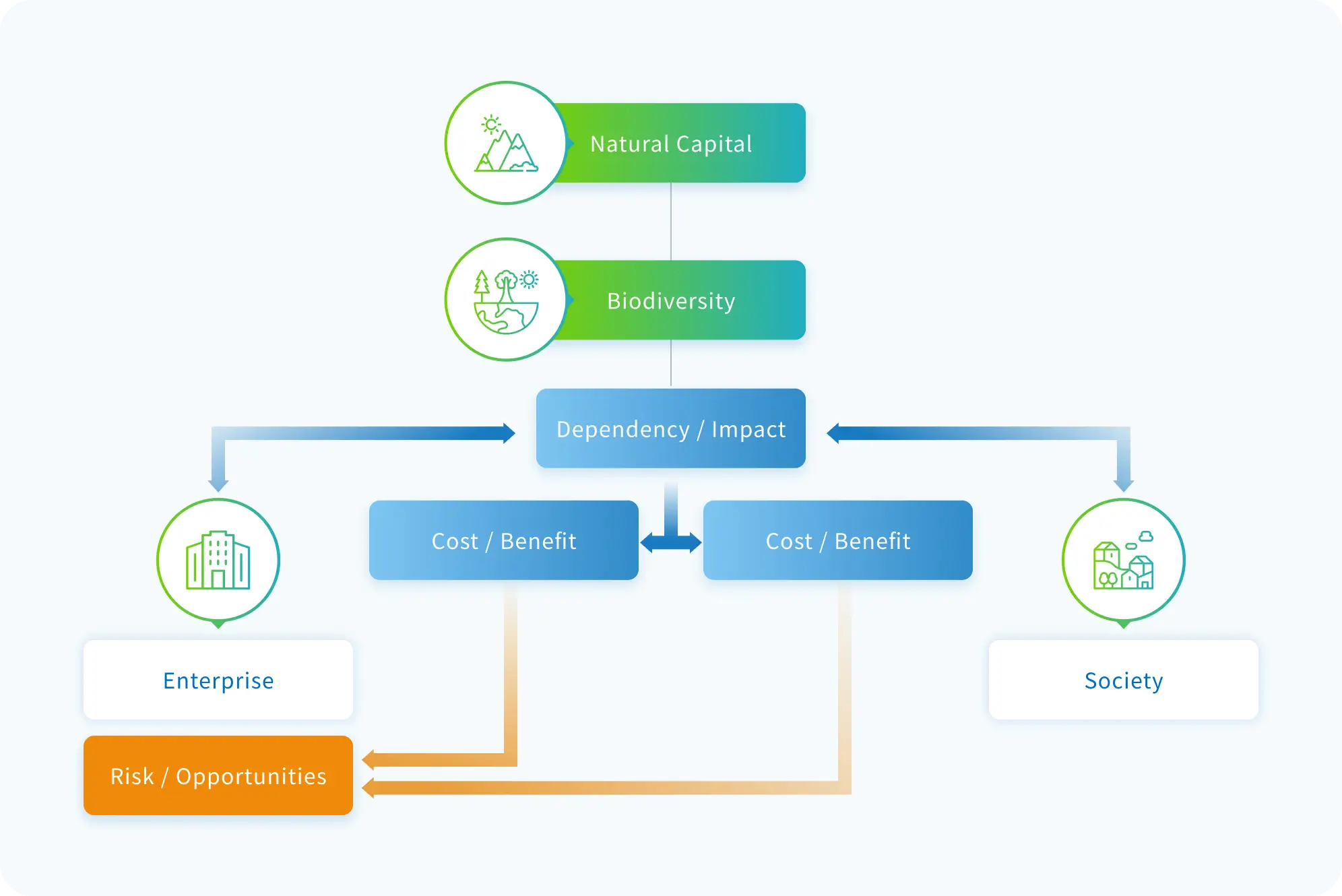
WNC applied to join the TNFD Forum in 2024 and became a TNFD Adopter. The company references the Taskforce on Nature-related Financial Disclosures (TNFD) framework and uses the Locate, Evaluate, Assess, Prepare (LEAP) risk assessment approach to regularly assess the interactions between its value chain operations and natural ecosystems, and analyzes corresponding nature-related risks and opportunities based on dependencies and impact pathways. WNC also identifies priority risks and opportunities through materiality analysis, then proposes management actions and targets and sets monitoring indicators to reduce its negative impact on biodiversity and enhance the scope of its positive influence, which will move the company closer towards the goal of creating a “Nature Positive” future. For detailed information on climate and nature-related risk identification and implementation of related initiatives, refer to WNC’s TCFD & TNFD Report.
TNFD interrelationship framework
LEAP assessment process

Locate
Compile list of sites for evaluation
A list of WNC's global sites as well as the locations of tier-1 suppliers with whom WNC has direct transactions is compiled. A total of 1,755 sites were compiled for evaluation (16 WNC sites and 1,739 supplier sites).
Conduct overlay and buffer analysis
Buffer zones with a radius of two kilometers are drawn around each site to define its potential area of impact. Data from the World Database on Protected Areas (WDPA) is used to conduct overlay analysis and assess whether the site is located in or near ecologically sensitive areas. In addition, the IUCN Red List of Threatened Species™ is used to further evaluate whether the operational activities at each site pose a threat to local endangered species.

Evaluate
Questionnaires
Questionnaires were distributed to WNC employees from relevant departments and to suppliers to understand the dependencies and impacts on nature at each stage of the value chain.
Dependency and impact assessment
Materiality is determined based on the level of stakeholder concern regarding the issue and the degree of impact the issue has. Through questionnaires, WNC identified a number of key dependency items (including three resource provision items and six regulation and maintenance items) and impact items (including three resource usage items, one climate change item, and two pollution items) related to upstream suppliers and its own operations.

Assess
Identification of nature-related risks and opportunities
Based on the resultsof dependency and impact assessments, discussions were held with external consultants to identify corresponding risks and disasters, and potential financial impacts and risk levels were evaluated using the impact pathways of disasters.

Prepare
Identification of management indicators and mechanisms
Responsible units formulate mitigation measures and early warning mechanisms based on the mitigation hierarchy steps of avoidance, minimization, restoration, and offsetting.
Nature-related financial disclosures report
WNC regularly assesses the interactions between it and nature and provides reports on nature-related governance, strategies, risk management, metrics and targets in accordance with the TNFD disclosure framework.
Environmental Protection

Biodiversity continues to be a focus for WNC. Since 2023, it has partnered with National Taiwan University on tree planting and afforestation projects, and the company encourages its employees to participate in environmental protection activities. In 2024, WNC launched a forest carbon sink development program. Surveys on species living in areas reforested by WNC are conducted annually, and a long-term monitoring mechanism is used to track the positive ecological impacts of the company’s reforestation projects. Through participating in reforestation activities, WNC employees gain a better understanding of ecological conservation and the importance of natural capital, in turn helping the company grow in a sustainable manner while doing its part to protect the environment.
Carbon sink and accumulated carbon sequestration
- 85% 整體林木存活率
- 1,198.1 kg CO₂/每公頃 溪頭造林地累積碳儲量
- 967.1 kg CO₂ 年增匯量
- 1,500 株/公頃 復育造林植栽密度
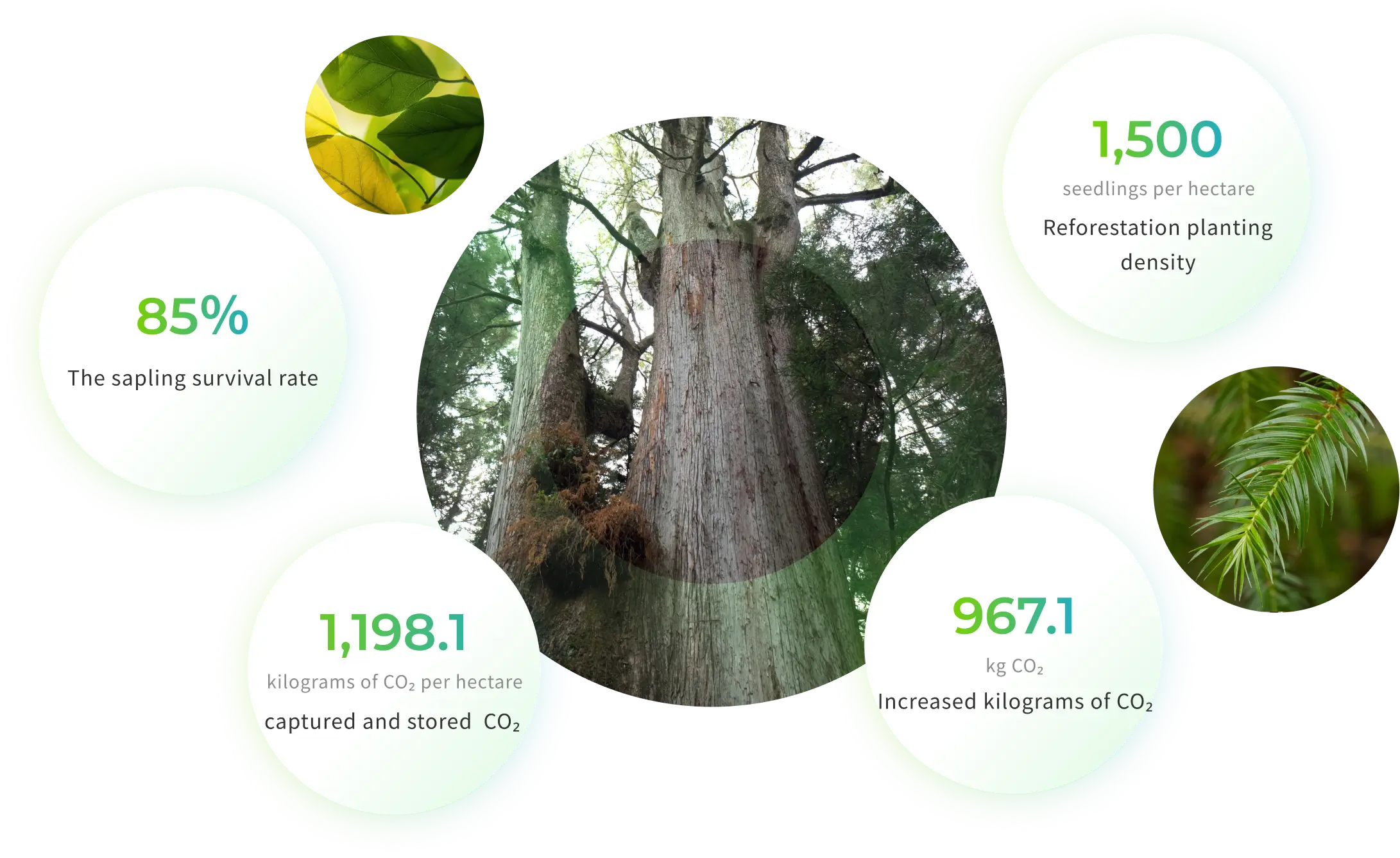
WNC’s afforestation project primarily features native Taiwan trees, such as the Taiwan red cypress, Cyclobalanopsis glauca, and incense cedar. In addition, weeding and forest tending are performed four times annually to ensure that seedlings have sufficient growing space, sunlight, and nutrients to thrive. Through the aforementioned actions, the sapling survival rate has consistently maintained at an average of 85% for the past few years. WNC also regularly calculates the carbon storage capacity and carbon stock within the areas it has reforested. To date, the reforested area in Xitou has captured and stored 1,198.1 kilograms of CO2e, an increase of 967.1 kilograms of CO2e over the previous year, demonstrating the contribution of forests to carbon sequestration and natural capital.
Carbon sink and accumulated carbon sequestration
Establishment of a Taiwan native species natural database
WNC has established a biodiversity survey methodology to monitor at least five species groups in reforested areas. Field surveys are generally conducted once per quarter, with survey frequency and timing adjusted according to species characteristics. Data on species names, habitat types, population counts, life forms and behavioral patterns collected during field surveys are recorded into a biodiversity database. The company has also incorporated quantifiable diversity metrics, such as the Shannon Diversity Index, to evaluate species richness and distribution evenness across newly reforested areas while advancing research into biodiversity credit methodologies.
Biodiversity Survey Baseline Methodology

Active Monitoring
Transect Surveys & Nocturnal Counts
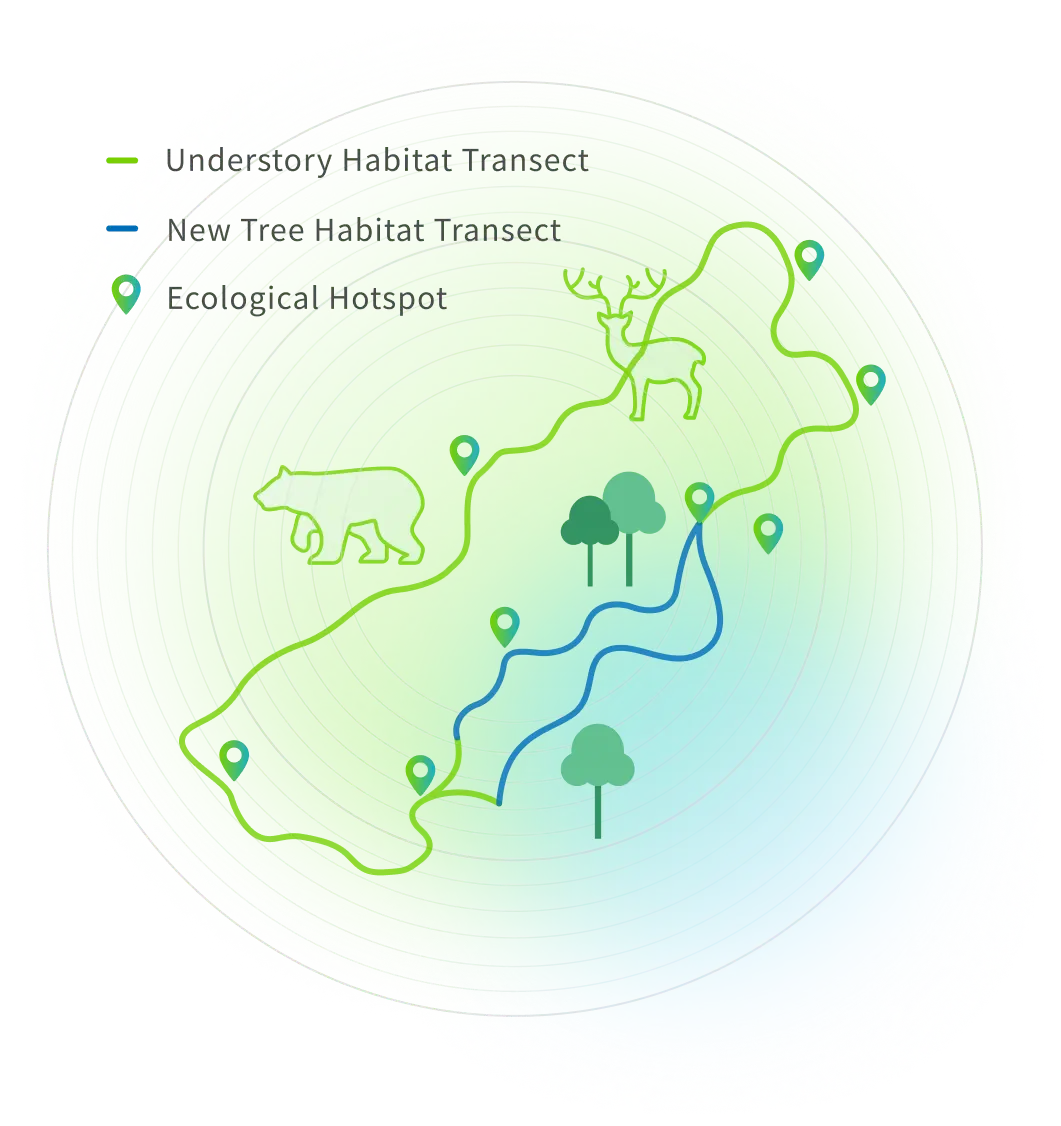
Conduct daytime and nighttime patrols along the 0.32 km understory habitat transect and the 0.15 km new tree habitat transect to record amphibians and reptiles

Active Monitoring
Fixed-Point Counting Method
Identify ecological hotspots—such as water retention ponds and fallen-log clusters—with high amphibian abundance, and conduct in-depth fixed-point observations

Passive Monitoring
Infrared Camera Traps
Since 2025, traditional pitfall trapping has been replaced with non-invasive infrared camera monitoring to avoid causing stress or injury to animals. This approach enables the monitoring of ground-dwelling and disturbance-sensitive species in a wildlife-friendly manner
Shannon Diversity Index
- Richness
- Evenness
- Shannon Diversity Index

Featured case of the year
Highlight
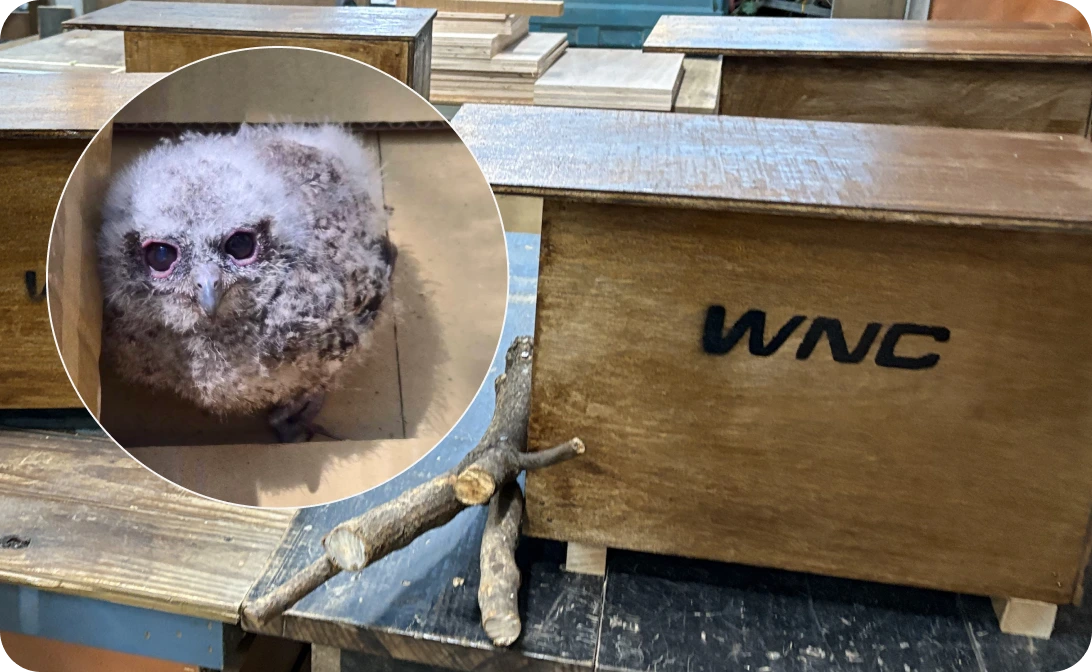
Employees work together to create an owl-friendly habitat
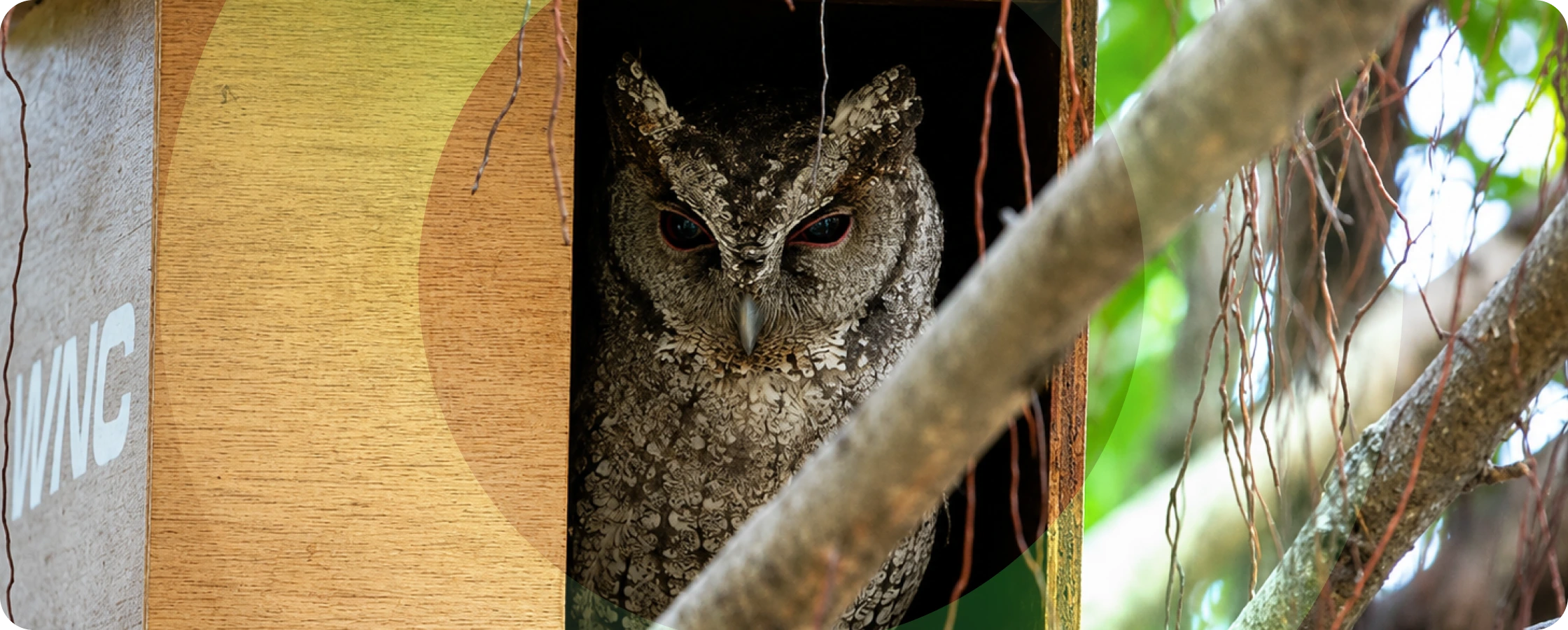
Owls, as indicator species at the top of the food chain, reflect habitat health and the integrity of ecosystems through their population changes. However, urban development and forest fragmentation have led to a significant reduction in natural tree cavities, severely impacting the reproduction of Collared Scops Owls. To support conservation efforts, employees at WNC’s Mechanical and Industrial Design Div. have voluntarily spearheaded the Creating Homes for Owls ESG campaign since 2024. Through seminars and nest box building workshops, employees and their families worked together to build alternative artificial habitats.
In 2025, WNC donated artificial nest boxes and monitoring cameras to schools and conservation groups across Hsinchu. In total, 12 recipient organizations completed nest box installations, and 11 of these installations are equipped with cameras. Seven nest boxes have recorded Mountain Scops Owls or Collared Scops Owls entering and utilizing them as nesting sites. At one location, three owlets were successfully hatched. Several recipient schools have integrated nest box monitoring into their curricula and environmental education programs. These schools have partnered with local communities, conservation groups, and academic institutions to incorporate camera footage into teaching and ongoing ecological observations.
This initiative not only internalizes ecological conservation within WNC’s corporate culture but also helps raise ecological awareness through campus-based nest box programs, guiding students to engage with critical issues like habitat destruction and environmental pollution. Ultimately, this cultivates environmental literacy and a sense of shared responsibility.