

Environment
Climate and Low-Carbon Management
2011

- Started participating in CDP climate-related disclosures
2012
- Conducted greenhouse gas inventory
2013
- Completed a product carbon footprint inventory for the first time
- Formulated and adopted ESH & Energy Management Policy
2014
- Started using paper that has FSC™ (Forest Stewardship Council) Chain-of-Custody certification
2017
- Implemented ISO 50001 standard
- Formulated and adopted Energy Management Policy
2018
- Made first disclosure through CDP questionnaire
2021
- Formulated and adopted Sustainable Development Policy
- Adopted TCFD framework
2022
- Established Sustainable Development Steering Committee and Sustainable Development Committee
- Formulated and adopted an Environmental Sustainability Policy
- Committed to TCFD initiative
- Introduced green buildings design at new sites
2023
- Joined RE100
- Signed SBTi commitment letter
- Joined the Taiwan Nature Positive Initiative (TNPI)
- Formulated and adopted the Water Resource Management Policy
- Formulated and adopted a Biodiversity and No Gross Deforestation Commitment
- Completed GHG inventory for all scopes
- Published first TCFD report
- Industry-academia cooperation - biodiversity monitoring
2024
- Adopted TNFD framework
- Implemented carbon management platform
- Implemented UL 2799 Zero to Waste Landfill validation program
- Established Sustainable Raw Materials Policy
- Established a Materials Carbon Footprint Database
- Formulated green product design indicators
- Vietnam site and S3 site obtained green building certification
2025
- Achieved A ratings (Leadership level) in CDP’s climate change, water security and supplier engagement questionnaires
- Vietnam & Kunshan site obtained UL 2799 platinum rating
- Passed SBTi target validation
- Introduce internal carbon pricing
- Published first TNFD report
Environmental sustainability policies and commitments
We are committed to achieving 100% renewable energy use and net-zero emissions, and we've established four core policies as guiding principles for our actions in protecting the environment.





Climate management
Governance
Strategy
Risk Management
Metrics and Targets
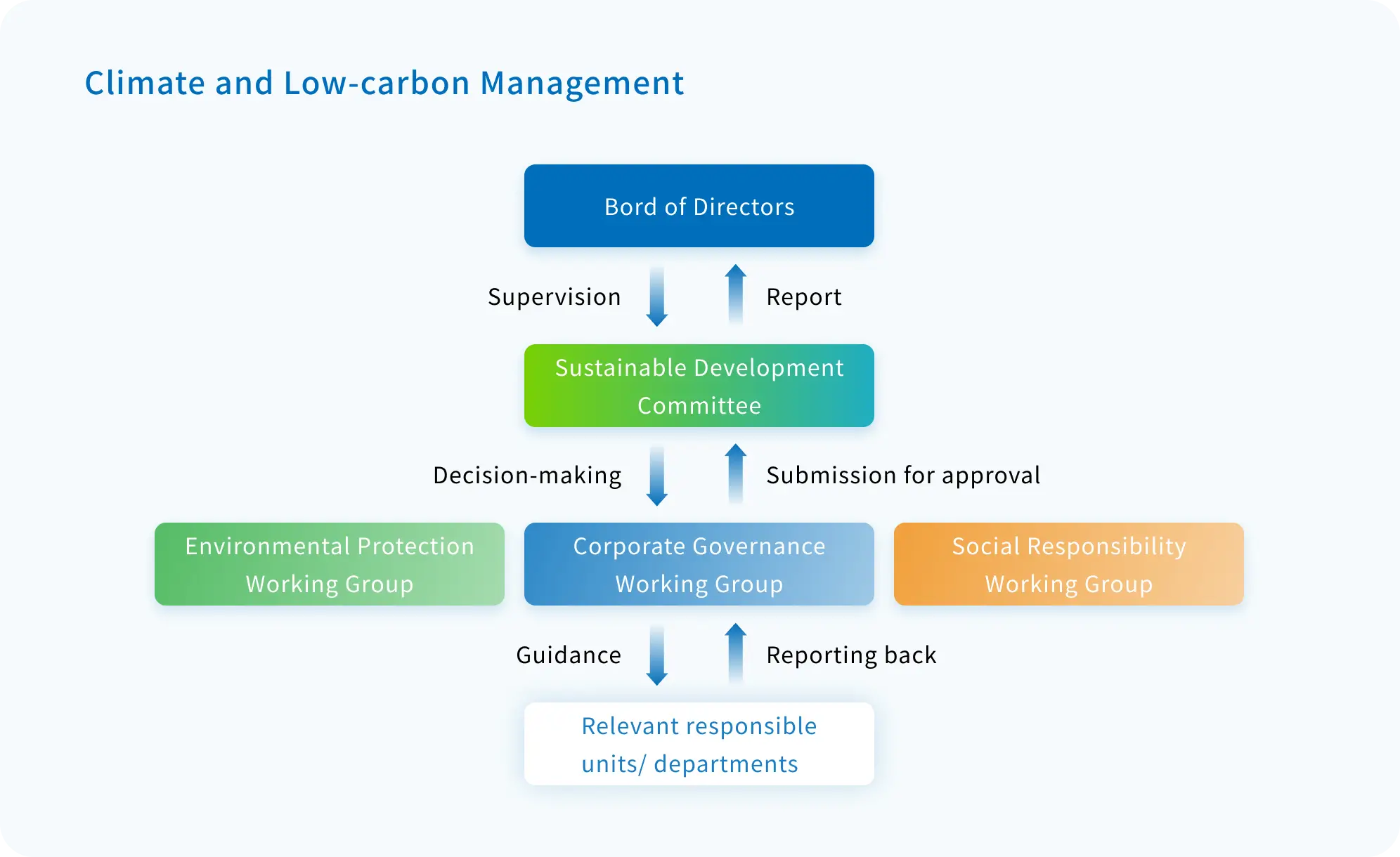
In 2024, to enhance the company’s sustainability governance, WNC adjusted its organizational structure and elevated the Sustainable Development Committee to the Board level, with the Chairperson of WNC serving as convener. The Sustainable Development Committee reports on the progress of sustainability related initiatives to the Board of Directors on a regular basis. In addition, the committee compiles sustainability strategies and supervises senior managers’ governance status and their performance in terms of key indicators. The Environmental Protection, Social Responsibility, and Corporate Governance working groups under the committee review the status of ESG projects every quarter and establish related management guidelines and action plans in accordance with WNC’s sustainable development directions. All company directors complete ESG-related training each year in accordance with applicable requirements. This enables them to stay abreast of the latest trends and best practices regarding economic, environmental, and social issues; enhance their ability to address climate change, nature, and biodiversity risks; and ensure the effectiveness and resilience of WNC’s sustainable development strategy, which will help the company and fulfill its environmental responsibilities. In 2025, company directors completed a total of 20 training courses, amounting to 69 hours, of which 26% were environmental-related courses.
In response to the Paris Agreement and the goal of limiting global warming to 1.5 °C above pre-industrial levels, WNC adopted the SBTi methodology to set science-based carbon reduction targets. WNC has also joined RE100, committing to using 100% renewable energy by 2040.
WNC adopted the TCFD framework in 2021, incorporating climate change into its risk assessments. A comprehensive risk assessment is conducted every three years, and a dedicated task force holds annual meetings to review issues related to risk, develop adaptation and mitigation measures, and track the progress of action plans. WNC first started using the Biodiversity Risk Filter (BRF), a tool developed by the World Wildlife Fund (WWF), in 2023 to conduct initial assessments of nature-related risks. In 2024, the company implemented the LEAP (Locate, Evaluate, Assess, Prepare) risk assessment approach in the Taskforce on Nature-related Financial Disclosures (TNFD) framework and published its first TNFD report in 2025. For detailed information on climate and nature-related risk identification and implementation of related initiatives, refer to WNC’s 2025 TCFD & TNFD Report. In 2025, WNC obtained SBTi validation for its carbon reduction targets and implemented an internal carbon pricing (ICP) mechanism, integrating carbon management into decision-making processes and helping the company work with global supply chain partners to build climate resilience.
Net-zero transition pathway
|
01 Foundation building and compliance 2020 - 2023
|
02 Resilience and digital transformation 2024 - 2026
|
03 Co-prosperity and value chain leadership 2027 - 2030+
|
|
|---|---|---|---|
| Business operations |
|
|
|
| Products |
|
|
|
| Supply Chain |
|
|
|
Collect topics of different aspects
- Transformation risks: Current regulations, emerging oversight, technology, legal factors, market conditions, and business reputation
- Physical risks: Immediacy and long-term implications
- Opportunities: Resource efficiency, energy sources, products and services, market, and resilience
Identify types and scope
- Types of impact: Operations, products and services, R&D investment, supply chain and/or value chain, and adaptation and mitigation activities
- Scope of impact: WNC’s upstream suppliers, business operations and downstream customers
- Time frame: Short term (1–2 years), medium term (2–5 years), and long term (5–10 years)
Assess likelihood/intensity
- Likelihood: Certainly, very likely, likely, moderately likely, possible, unlikely, very unlikely
- Degree of Impact: High, medium-high, medium, medium-low, and low (based on factors such as revenue, production capacity or service locations, personnel injury, regulatory compliance, and reputational consequences).
Determine material topics
A matrix analysis was established using a threshold of 66% likelihood and medium-high impact for initial screening. The significance of each issue was then ranked based on the product of these two determining factors. Final material topics were confirmed through consensus among task force members.
Formulate management actions
With reference to the 4T principles of risk management—Tolerate, Treat, Transfer, and Terminate—WNC develops corresponding management measures, with short-, medium-, and long-term goals and monitoring indicators in place. Project progress is regularly tracked by the Environmental Protection, Social Responsibility, and Corporate Governance working groups to enhance climate resilience through mitigation and adaptation.
WNC Sustainability Goals and Environmental Management Performance Indicators
- SBTi 1.5°C 溫室氣體減量目標
- RE100 電力及再生能源目標
- UL 2799 廢棄物管理目標
- ISO 14001 水資源管理目標
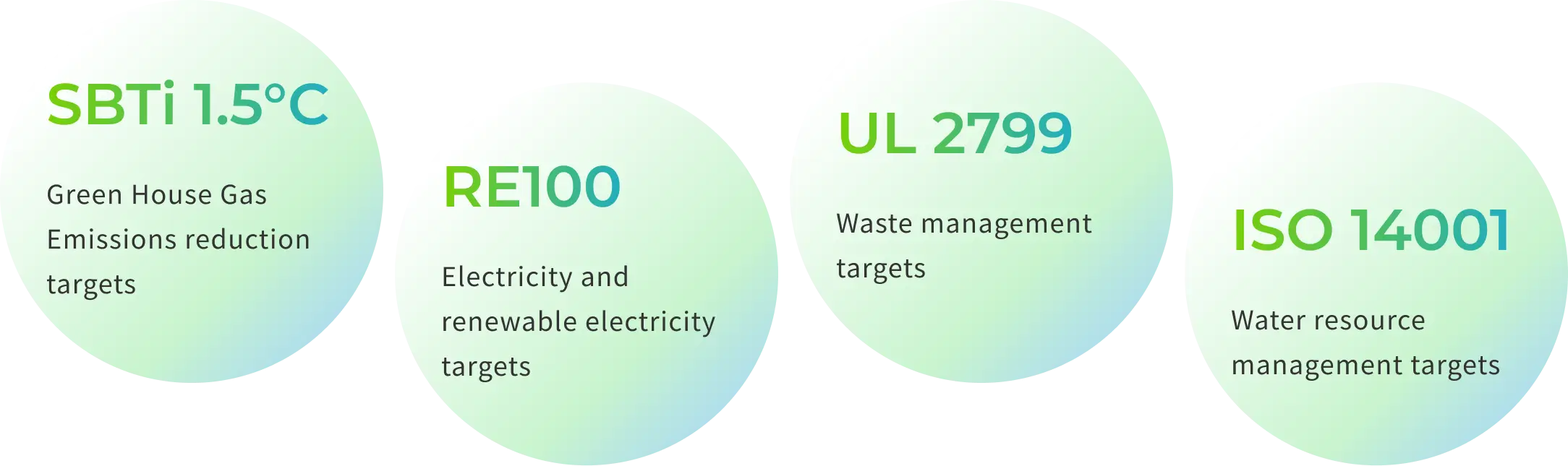
WNC discloses the environmental management performance indicators it has identified, and the company sets key short-, medium-, and long-term climate and environmental targets based on international initiatives, ISO standards, market regulations, and customer requirements. WNC’s greenhouse gas reduction targets are set in accordance with the SBTi 1.5 °C decarbonization pathway, while its electricity and renewable energy targets align with the standards of the RE100 initiative. The company’s waste management targets follow the requirements of UL 2799 Zero Waste certification, and water resource management is conducted in accordance with ISO 14001 standards. Targets related to green products and sustainable materials are managed according to customer specifications and market expectations. Through the aforementioned target setting and performance tracking, WNC demonstrates that its climate-related management actions meet expected requirements and market regulations. For information on annual indicators and targets, go to the Sustainability Strategy page.
Progress on SBTi targets
WNC has committed to reducing Scope 1 and Scope 2 GHG emissions by 42% by 2030, compared to the 2022 baseline, and Scope 3 emissions by 25% compared to the 2023 baseline (all targets cover 100% of base year emissions). In addition, WNC has set long-term targets to reduce Scope 1, 2, and 3 GHG emissions by 90% by 2050 from their respective 2022/2023 baselines, achieving net-zero emissions across all scopes by 2050. In line with the SBTi Net-Zero Standard's requirement to neutralize residual emissions through permanent, long-duration carbon removal, WNC plans to purchase carbon off-set credits and introduce long-term carbon removal technologies to neutralize residual emissions remaining after the 90% reduction target. The company also aims to achieve net-zero emissions across all scopes by 2050.
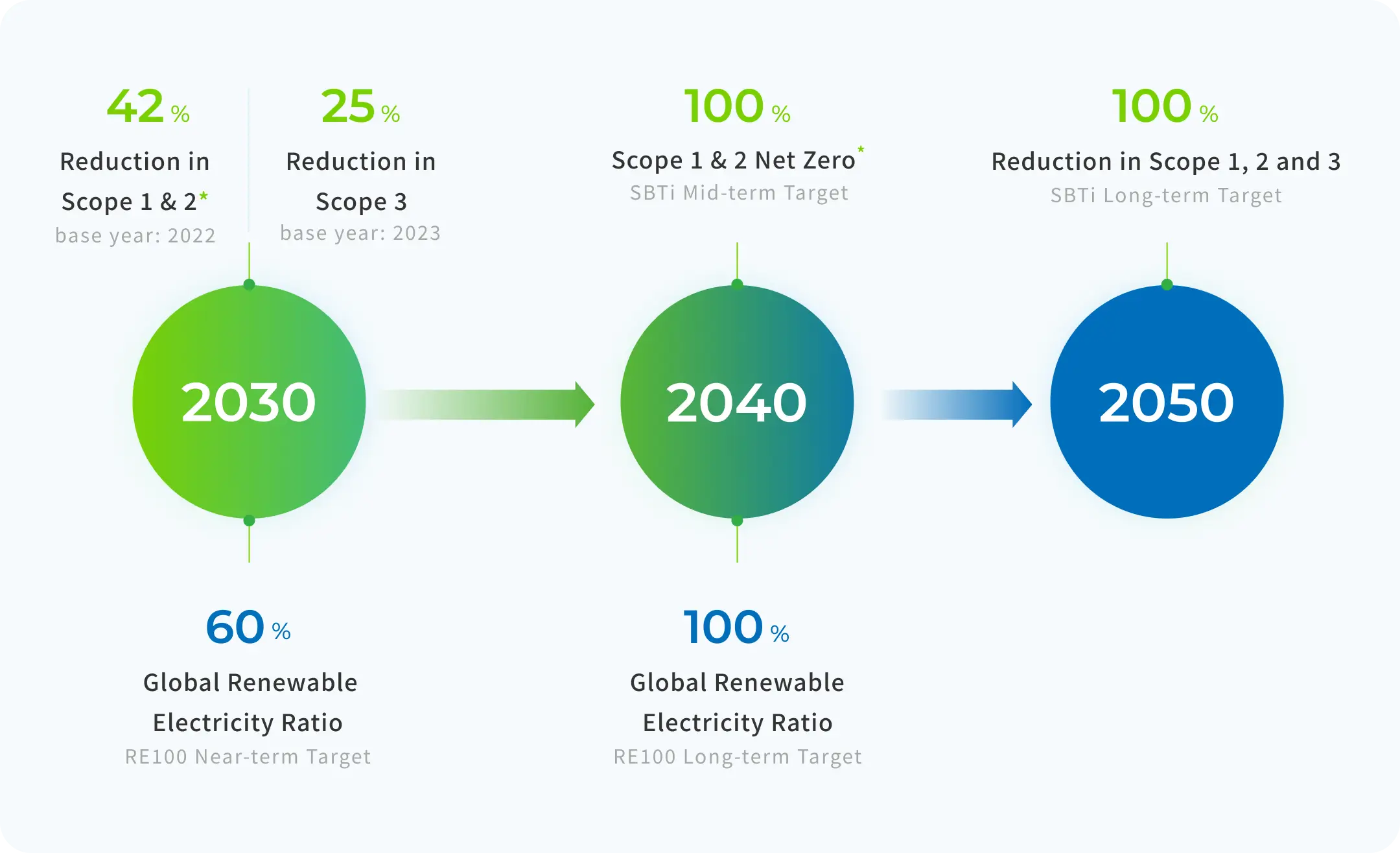
Note To accelerate its net-zero transition, WNC has announced its commitment to achieving net-zero emissions for Scope 1 and Scope 2 by 2040, ahead of its previous target, and will formally submit an amendment application to the SBTi.
WNC has referenced ISO 14064-1: 2018 and the GHG Protocol to set organizational boundaries according to operational control laws. We established 2022 as the base year to calculate our greenhouse gas emissions and for verification purposes. In 2025, the company added the Mexico site into the boundary, completing greenhouse gas inventory and verification for all of its sites in alignment with the boundary of its financial statements. Third-party certification has also been obtained for the aforementioned GHG inventory. In 2025, WNC’s total GHG emissions amounted to 5,478,954.22 tonnes CO2e, representing a 1.09% decrease compared to 2024. Scope 1, 2, and 3 emissions accounted for 0.04%, 0.9%, and 99.06% of the total, respectively. Starting from 2023, WNC has kept expanding its Scope 3 inventory boundary, resulting in a significant increase in reported emissions. Emission trends will be regularly monitored, as it will serve as an important basis for planning carbon-reduction strategies.
In 2025, WNC’s Scope 1 and Scope 2 emissions amounted to 51,599.25 tonnes CO2e, representing a cumulative reduction of 19.01% when compared to the base year and exceeding the company’s target of 15.75% for the year. In the same year, WNC’s Scope 3 emissions totaled 5,427,354.97 tonnes CO₂e.
GHG emissions trends in the most recent four years
Emissions from business operations (Scope 1 and Scope 2)
In 2025, GHG emissions from operations totaled 51,599.25 tonnes CO₂e, with an emissions intensity of 0.47 tonnes CO₂e per NT$ million of consolidated revenue. Annual Scope 1 emissions totaled 2,092.11 tonnes CO₂e, accounting for 0.04% of total emissions, with an emissions intensity of 0.02 tonnes CO₂e per NT$ million of consolidated revenue. These emissions primarily comprised hydrofluorocarbons (64.08%) and carbon dioxide (35.69%), with small amounts of nitrous oxide (0.14%) and methane (0.10%). Annual Scope 2 emissions (market base) totaled 49,507.14 tonnes CO₂e, accounting for 0.9% of total emissions, with an emissions intensity of 0.45 tonnes CO₂e per NT$ million of consolidated revenue. Electricity consumption was the largest source of emissions.
Scope 1 emissions in the most recent four years
Scope 2 emissions in the most recent four years
Note The organizational boundary for the 2025 greenhouse gas emissions inventory covers WNC’s global operations, achieving 100% coverage.
Note For 2025, the emission factors for Scope 1 were sourced from the Greenhouse Gas Emission Factor Management Table (Version 6.0.4) published by the Ministry of Environment. The global warming potential (GWP) values for all greenhouse gases were based on the latest 2021 AR6 values. For Scope 2, electricity emission factors were based on the latest values published by the relevant local authorities.
Description of value chain emissions (Scope 3)
In 2025, WNC’s Scope 3 GHG emissions amounted to 5,427,354.97 tonnes CO2e. Under its SBTi decarbonization targets, WNC identified significant Scope 3 categories representing more than 97% of total Scope 3 emissions, including Category 1: Purchased Goods and Services, Category 3: Fuel- and Energy-related Activities, and Category 11: Use of Sold Products, in accordance with the Greenhouse Gas Protocol (GHG Protocol). In 2025, emissions from key Scope 3 categories amounted to 5,279,905.96 tonnes CO2e, a 7.69% decrease in absolute emissions compared with the 2023 base year. The emissions intensity of these significant Scope 3 categories was 47.89 tonnes CO2e per NT$ million in revenue, reflecting WNC’s steady progress toward its SBTi decarbonization targets.
Note From 2021 to 2022, a number of Scope 3 emissions categories were gradually incorporated into WNC’s greenhouse gas inventory. Since 2023, emissions from all Scope 3 categories have been calculated on an annual basis. For Scope 3 Category 1 and Category 11 emissions in 2023, following the approval of WNC’s SBTi targets in February 2025, and to ensure consistency between emissions disclosures and the committed SBTi reduction pathway, emissions for these two categories were estimated using an extrapolation method based on actual operating activities. In 2025, data from the Mexico site was incorporated, resulting in 100% Scope 3 emissions coverage.
Featured case of the year
Highlight
WNC's performance in climate governance recognized by CDP
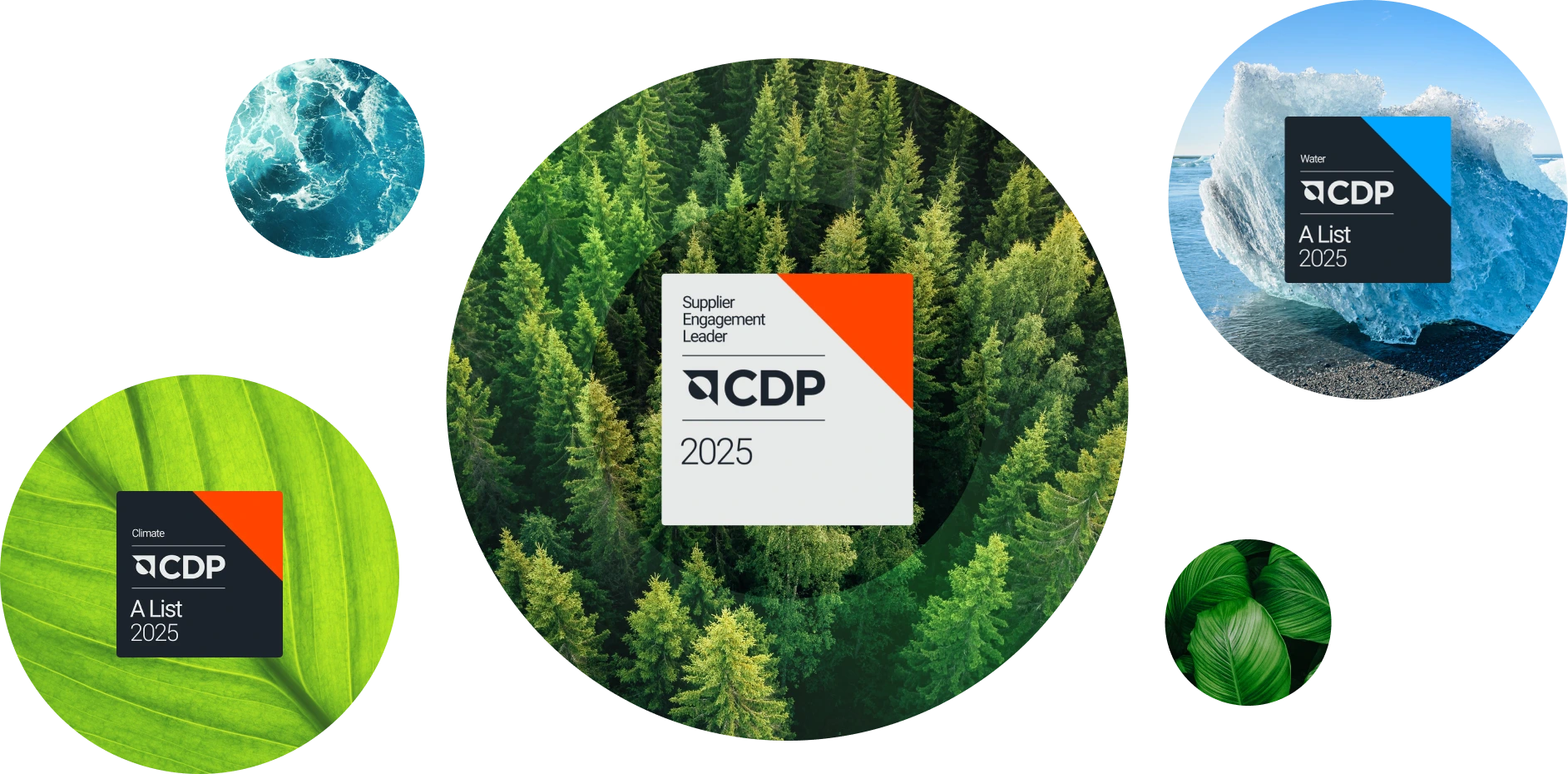
In 2025, WNC achieved A ratings (Leadership level) in each of CDP's Climate Change and Water Security questionnaires and its Supplier Engagement Assessment. Fewer than 2% of companies worldwide were able to achieve this, a testament to WNC's performance in climate governance and transparency in its environmental initiatives.
Highlight
WNC has officially launched its ICP mechanism
To further transform climate risks into a driver of transformation, WNC formally launched its Internal Carbon Pricing (ICP) mechanism in 2025. In the first year, a shadow price of USD 30 per metric tonne CO2e (USD/tCO2e) was applied on a trial basis. The mechanism aims to drive the company's net-zero goals, and its application covers greenhouse gas management across Scope 1, Scope 2, and Scope 3. It serves as a quantitative reference for equipment procurement and green product energy-efficiency design, helping to drive energy efficiency and drive low-carbon investments. Carbon costs are also incorporated into new business evaluations and capital expenditure decisions to conduct cost-benefit analysis, and to influence strategy and/or financial planning by strengthening the consideration of climate-related risks.
In terms of governance, internal carbon pricing incentivizes consideration of climate-related issues in decision making and in risk assessment by being integrated into the risk assessment process for major investment projects. It also helps the company identify and seize low-carbon opportunities and position its technology development. Through the investment evaluation of carbon capture technologies, it helps the company navigate regulations, including existing and potential climate-related regulations such as local carbon fees and carbon border tariffs applicable to each plant location. It also supports procurement decision-making to reduce upstream value chain emissions (Scope 3). In addition, internal carbon pricing serves as a core quantitative tool for the setting and/or achieving of climate-related policies and targets, including net-zero targets. The ICP is also intended to serve as a reference for stress testing major investments under higher carbon price scenarios, and for setting the carbon offset budget for high-quality carbon credits to neutralize residual emissions, which complement rather than replace direct emission reductions.
Furthermore, in 2025, the company invited external experts to conduct senior executive training and launched pilot programs at its plants, with plans to gradually extend to global sites. At present, internal carbon pricing is applied to some business decision-making processes, and its scope of application will be progressively expanded based on the results of the pilot programs.