

Governance



Company Operations
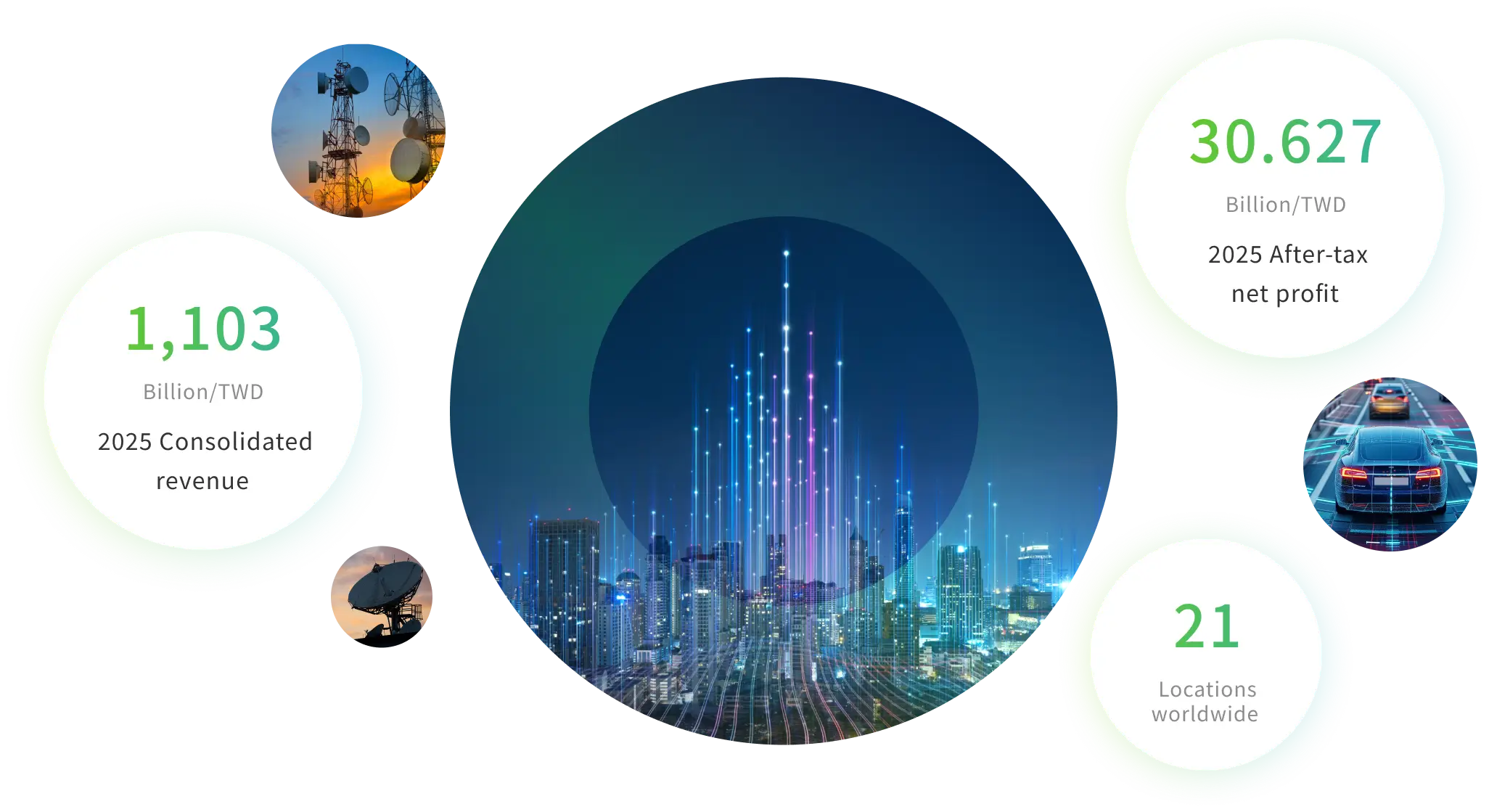
WNC provides whole-range communications solutions covering consumer, enterprise-level, industrial-grade, and automotive products. For years the company has been a market leader in network communications, network infrastructure, smart home, and advanced driver-assistance systems (ADAS). With 21 locations worldwide, WNC provides comprehensive communications solutions and local support for its customers wherever they may be. In 2025 WNC’s consolidated revenue was NT$110.3 billion, with after-tax net profit of NT$3.06 billion.
Corporate Governance
WNC has stipulated Sustainable Development Best Practice Principles, Corporate Governance Best Practice Principles, Ethical Management Best Practice Principles, and a Code of Ethical Conduct, and each functional unit in WNC has their own responsibilities in promoting and implementing corporate governance in accordance with WNC policy. Implementation results are reviewed semi-annually. The Finance Division, the Legal & IP Division, the Human Resources Administration Division, the Quality Assurance Division and the Sustainable Development & Marketing Division work together to closely monitor related international proposals and regulations to determine whether the company needs to update its management guidelines and operational procedures related to corporate governance.
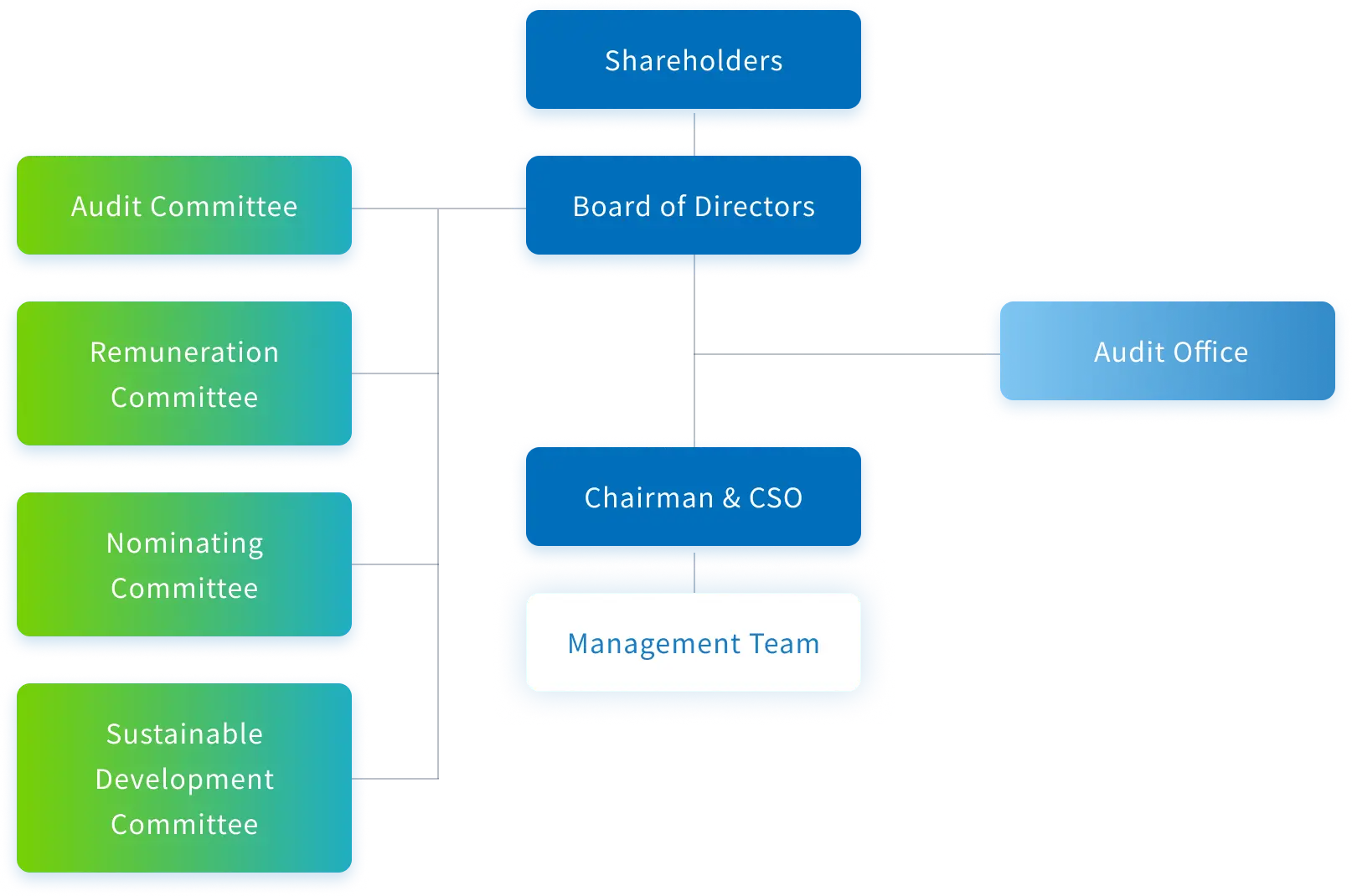
Pursuant to WNC’s Corporate Governance Best Practice Principles, the Board of Directors, which is the highest governance body of the company, maintains an average attendance rate of at least 90% for all directors. In 2025, the attendance rate at Board meetings reached 100%, with responsibilities including supervising the lawful operations and financial transparency of the company, approving the appointment, dismissal and remuneration of senior managers, and providing strategic guidance to the management team. To assist the board in its operations and functions, an Audit Committee, Remuneration Committee, a Nominating Committee and a Sustainable Development Committee have been established.
The Taiwan Stock Exchange (TWSE) and the Taipei Exchange (TPEx) jointly conduct a Corporate Governance Evaluation every year. WNC has consistently ranked among the top 20% of all listed companies. In 2026, WNC was selected as a constituent of the Dow Jones Best-in-Class Emerging Markets Index (DJBCI), the TWSE RAFI Taiwan High Compensation 100 Index, the TIP Taiwan Listed and OTC Technology High Dividend Growth Index, and the Taiwan Pristine Stock Index.
Operation of functional committees
| Committee | Composition | Responsibilities | Implementation status in 2023 |
|---|---|---|---|
| Audit Committee |
| An audit committee meets every quarter to monitor the execution of WNC’s internal controls and risk management. The committee assists the Board of Directors in the execution of its supervisory capacity, raising WNC’s financial standing and credibility. | The Audit Committee meets at least once every quarter. Four meetings were convened in 2025, with an attendance rate of 100% for all committee members. |
| Remuneration Committee |
| Establish and periodically review the compensation policies, systems, standards, and structure of WNC’s directors’ and executive officers’ compensation. | The committee meets at least twice every quarter. Three meetings were convened in 2025, with an attendance rate of 100% for all committee members. |
| Nominating Committee | The committee is composed of five directors, over half of whom are independent directors. The committee is chaired by WNC Chairman Haydn Hsieh. | The primary duties of the committee include selecting and assessing candidates for board members, executive officers, and members of committees under the Board of Directors, and formulating and implementing continuous learning plans for directors. | Two meetings were convened in 2025, with all committee members in attendance. |
| Sustainable Development Committee | The committee is composed of two directors, two independent directors, and three non-director members. The Chairman of WNC, Haydn Hsieh, serves as the committee's chairperson. | The committee develops goals based on corporate sustainability directions and strategies, related management policies, outlines specific implementation plans, and tracks the execution results and effectiveness of WNC’s sustainability-related efforts. | The committee meets at least twice every quarter. Two meetings were convened in 2025, with an attendance rate of 100% for all committee members. |
Operations and diversification of board of directors
According to the Articles of Incorporation, WNC appoints seven to nine directors, who are elected by the shareholders' meeting from the list of director candidates in accordance with the candidate nomination system. The directors serve a term of three years and may be reelected for consecutive terms. To ensure that independent directors carry out their duties in an objective manner, none of WNC’s independent directors have served for more than nine years consecutively. The 12th Board of Directors was elected at the 2026 Annual General Shareholders’ Meeting. The Board comprises nine directors, including three female directors (33%), two employee directors (22%), and four independent directors (44%). The average tenure of the directors is 12.7 years. To improve decision-making efficiency and carry out the resolutions of the Board of Directors, WNC’s Chairman also serves as the company’s Chief Strategy Officer. All directors have extensive experience in business, legal affairs, finance, accounting, risk management or corporate business, assisting the Board in making decisions that are most beneficial to the company and shareholders.
In accordance with Article 20 of the Corporate Governance Best Practice Principles, the composition of the Board of Directors should reflect an appropriate diversity policy based on the WNC’s operations, business profile, and development needs. The current Board has met all of the specific management targets set forth under its Board diversity policy:
- The number of directors who concurrently serve as executive officers in WNC does not exceed one-third of the total number of directors
- At least one-third of board members are female
- Independent board members do not serve for more than three terms
- There are board members with inter-disciplinary expertise
- The number of independent board members exceeds the number stipulated by law
Board training courses and performance evaluation
All directors complete the required annual professional development in accordance with the Directions for the Implementation of Continuing Education for Directors and Supervisors of TWSE- and TPEx-Listed Companies. The total number of training courses WNC directors participated in in 2025 was 20. On average, each director spent 7.66 hours on sustainability-related courses, including topics such as cybersecurity governance and management in the context of geopolitics, the current global economic outlook and the effects of US President Donald Trump’s policies. WNC has established Regulations Governing Performance Evaluation of the Board of Directors and Functional Committees to enhance Board effectiveness and to serve as a reference for determining the remuneration of directors and functional committee members, as well as for nominating directors for re-election.
Internal
The performance of the Board as a whole, individual directors, and functional committees is assessed annually, with the results reported to the Board of Directors in the first quarter of the following year. The 2025 internal self-assessment results for the Board of Directors and its functional committees were all rated “exceeds standards” and were reported to the Board on March 11, 2026.
External
At least once every three years, WNC engages an independent external professional institution or a team of experts and scholars to conduct a Board performance evaluation. The evaluation results are reported to the Board in the first quarter of the following year and disclosed in the Company’s annual report. An independent external professional institution will be commissioned to conduct a Board performance evaluation by the end of 2026.
Engagement in climate-related policies

In response to the Paris Agreement and the goal of limiting global warming to 1.5 °C above pre-industrial levels, WNC adopted the SBTi methodology in 2023 to set science-based carbon reduction targets. In the same year, WNC also joined RE100, committing to using 100% renewable energy by 2040. To accelerate nature-related risk assessment and disclosure, WNC applied to join the TNFD Forum in 2024 and became a TNFD Adopter.
In 2026, WNC established Public Policy Engagement Management Guidelines, which govern all policy engagement activities based on the core principles of transparency, legal compliance, avoidance of conflicts of interest, and the public good. All communications and policy advocacy involving government agencies, elected representatives, or regulatory authorities are subject to internal assessment and legal review. Such activities are overseen by the Sustainability Committee and regularly reported to the Board of Directors. WNC is committed to ensuring that all initiatives it participates in and the positions of the organizations it supports are aligned with the Paris Agreement. WNC also strictly prohibits any improper influence on policymaking or policy engagement activities and promotes industry innovation and sustainable development through cross-functional collaboration and transparent disclosure.
In 2025, WNC participated in and supported a total of 53 industry associations, organizations, and initiatives, covering areas such as industry development, technological innovation, and sustainable development. Following an assessment, 14 of these associations, organizations, and initiatives were identified as climate-related, accounting for approximately 26.4% of all associations, organizations, and initiatives in which WNC participated. WNC conducted an engagement effectiveness assessment of these 14 climate-related associations and organizations, reviewing and evaluating whether their public policy positions, activity plans, and related actions were aligned with the Company’s Public Policy Management Guidelines and climate targets. Please refer to the Assessment Results of Climate Targets of Industry Associations and Organizations.
Public contributions & other spending in the most recent four years (Unit: NTD)
| Contributions | 2022 | 2023 | 2024 | 2025 |
|---|---|---|---|---|
| Lobbying, interest representation or similar | 0 | 0 | 0 | 0 |
| Local, regional or national political campaigns / organizations / candidates | 0 | 0 | 0 | 0 |
| Trade associations or tax-exempt groups (e.g. think tanks) | 6,543,203 | 8,508,827 | 12,020,858 | 10,460,000 |
| Other (e.g. spending related to ballot measures or referendums) | 0 | 0 | 0 | 0 |
| Total contributions and other spending | 6,543,203 | 8,508,827 | 12,020,858 | 10,460,000 |
| Coverage (Number of Sites) | 100 | 100 | 100 | 100 |
Implementation of International Financial Reporting Standard (IFRS)
WNC has established an internal mechanism for inventory of IFRS sustainability-related information, works closely with external consultants, and participates in relevant training programs organized by external institutions to keep pace with the latest regulatory developments. In line with the implementation timetable prescribed by the competent authority, WNC will form a cross-functional project team to coordinate relevant plans, regulatory requirements, and industry classification guidance, and will progressively implement a framework that complies with the IFRS Sustainability Disclosure Standards, thereby addressing the diverse needs of stakeholders.

Senior management compensation policy and performance is linked to sustainability indicators
Remuneration of directors is determined in accordance with the Articles of Incorporation, as approved by the shareholders' meeting. It is set at no more than 1% of the year’s profits (profit here indicates pretax profit without deducting profit-sharing bonuses for employees and directors), and is paid in cash. Director remuneration is determined with reference to WNC’s operating performance, the industry’s risks and development trends, and each director’s degree of participation in and contribution to the Company’s operations. The related performance evaluation and rationalization of the remuneration is audited by the Remuneration Committee and the Board of Directors and may be reviewed at any time based on practical operational conditions and related laws and regulations to achieve a balance between continuity of operations and risk control. Senior management compensation comprises fixed and variable components, designed to balance the interests of employees, shareholders, and the company’s long-term interests. The compensation package includes a fixed component of salary, bonuses, and benefits and a variable component of bonuses, dividends (cash/stock), stock (restricted stock / employee stock ownership trust) and stock options based on WNC's operational performance in the year.
WNC incorporates sustainability performance indicators as one of the key criteria in determining short-term performance bonuses and long-term incentive plans (e.g. stock) for all first-tier senior executives. This links senior executives to the company's sustainability responsibility and accountability, promotes the implementation and continuous improvement of sustainability strategies, and supports the achievement of the strategic goal of sustainable operations. Company targets include both financial and non-financial indicators, and individual annual targets include operational targets and ESG indicators. The achievement of ESG performance indicators directly affects the weighting of bonus allocation, increasing or decreasing it by up to 10%. In addition, the management targets for the President & CEO and the CSO follow WNC's SBTi-validated targets, covering a 42% absolute reduction in Scope 1 and Scope 2 GHG emissions by 2030 (from a 2022 base year) and a 25% absolute reduction in Scope 3 GHG emissions by 2030 (from a 2023 base year). The BG heads' management targets include increasing the percentage by weight of post-consumer recycled (PCR) plastics used in routers to 60% by 2030. Site managers' management targets include increasing the renewable energy (RE) ratio to 60% by 2030.
To embed sustainability goals into its corporate culture, WNC has established annual ESG key performance indicators (KPIs) for employees. These KPIs cover climate change management targets, including greenhouse gas emissions reduction and energy-efficiency improvement. Progress toward these targets is regularly monitored through quarterly Environmental Working Group meetings. In addition, WNC organizes the "ESG Good Ideas Competition” for all employees, encouraging them to contribute creative ideas and propose impactful sustainability solutions. Employees whose proposals deliver tangible environmental or social benefits receive cash prizes and medals, encouraging active participation in sustainability innovation across the company.
| Aspect | Accounting metric | Weighting |
|---|---|---|
| Financial performance | Achievement of company performance indicators and individual performance indicators | 100% |
| Sustainability performance | Sustainability performance indicators: SBTi GHG reduction target achievement rate, renewable energies use ratio | ±10% |