
Sustainability
Stakeholder Engagement
Materiality Analysis
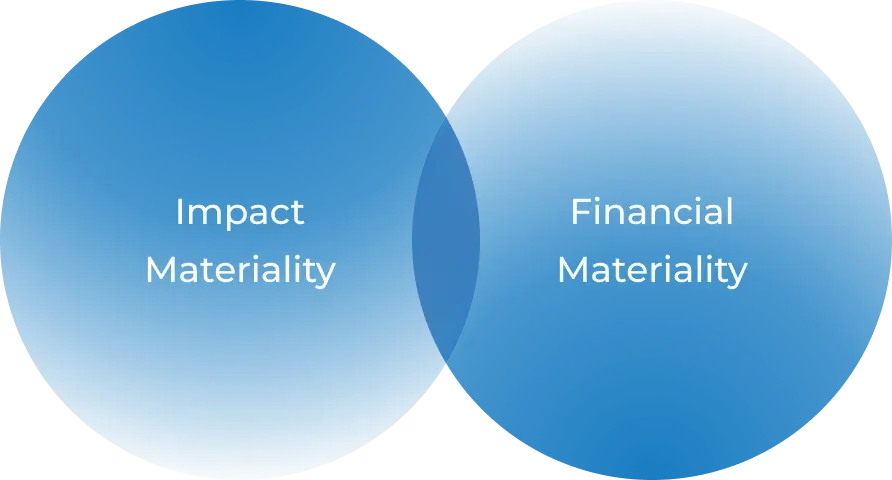
Materiality analysis is the fundamental and most important process for both risk identification and the quality of sustainability reporting. In 2025, WNC conducted materiality analysis using a double materiality approach, in compliance with the disclosure principles in the latest GRI 3: Material Topics 2021 and under the European Sustainability Reporting Standards (ESRS) structure announced by the EU’s Corporate Sustainability Reporting Directive (CSRD) and European Financial Reporting Advisory Group (EFRAG). This evaluation assesses impact materiality: the external effects of WNC’s business operations on the economy, environment, and human rights; and financial materiality: how sustainability issues influence WNC’s financial position, business performance, and future development.
Regarding assessment methodologies, WNC complies with GRI standards and the AA1000 Stakeholder Engagement Standard (SES). In addition, it leverages the economic, environmental, and social impact evaluation models developed by the Value Balancing Alliance (VBA), the Harvard Business School’s Impact-Weighted Accounts project, and the London Benchmarking Group (LBG). These frameworks form the basis for analyzing the impact of sustainability issues on external society and natural ecosystems.
Materiality Analysis Process
Building on the dual-track assessment approach, WNC has established a four-step process for identifying materiality:

Step 1
Sustainability issues list and impact on external factors
- 22 sustainability topics
- 21 external factors that impact
- New topics: Ethical Management and Legal Compliance, Risk and Crisis Management, and Human Rights Management
Step 2
Stakeholder identification and materiality assessment
- 5 key stakeholder groups: Employees, shareholders/investors, suppliers/contractors, customers, and communities
- 3 key questionnaires on stakeholders’ level of concern, financial materiality, and impact materiality were sent out; 2,565 questionnaires were collected
Step 3
Double materiality analysis
- Develop a materiality matrix based on materiality analysis results of the 3 key questionnaires
- After the CSO reviews the 16 material topics, the topics are submitted to the Sustainable Development Committee and the Board for review and approval
Step 4
Management of material topics
- Compile information on impact of material topics on the value chain
- Formulate annual sustainability management goals
重大性矩陣
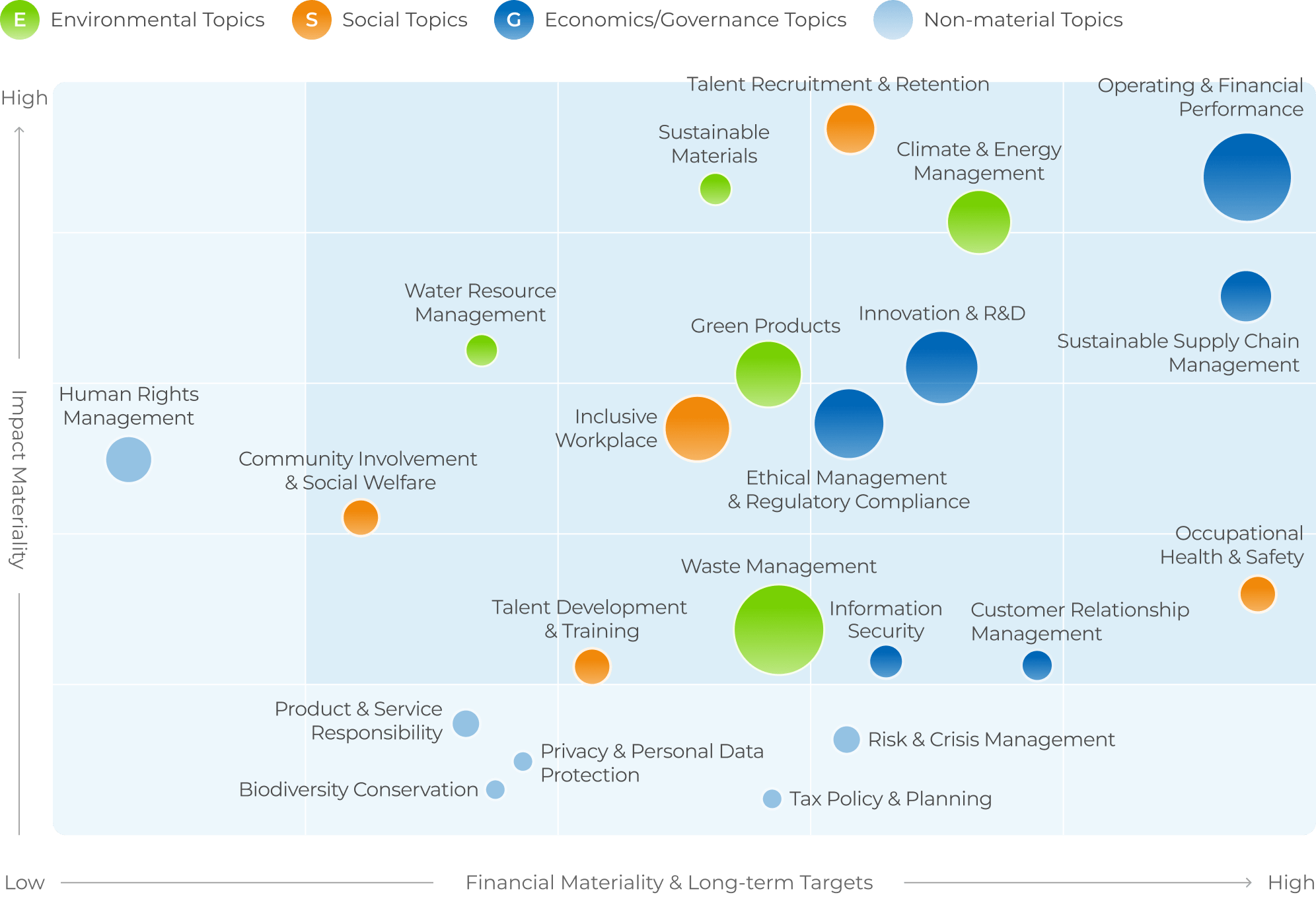
2025 年度,啓碁依循雙重重大性(Double Materiality)流程辨識出 16 項重大議題,並透過三維分析架構重大性矩陣:以 X 軸評估財務重大性與中長期策略關聯、Y 軸反映公司活動對外部經貿、環境與人權的影響重大性、Z 軸衡量利害關係人關注度。此三維矩陣系統性交叉比對財務與外部衝擊,並融合利害關係人觀點,作為啓碁重大議題排序、永續策略、風險管理與資訊揭露的核心依據。
16 material topics
WNC selected the 16 material topics for its 2025 Sustainability Report based on the following two principles:
Principle 1: Results from the three key materiality questionnaires
- Stakeholders’ level of concern
- Financial Materiality
- Impact Materiality
Principle 2: Topics related to long-term sustainability goals set by WNC for the year 2030
Priority is given to sustainability topics that already have defined:
- strategic directions
- targets
- action plans
WNC identified 16 material topics, which were confirmed by senior management and subsequently submitted to the Board for approval and confirmation. These topics served as the foundation of the 2025 Sustainability Report and the advancement of sustainability initiatives.
The 16 material sustainability topics and the differences compared with the topics from the previous year are summarized in the table below:
- Ethical Management and Regulatory Compliance (Newly added)
- Operational and financial performance
- Sustainable supply chain management
- Innovation and R&D
- Customer relations management
- Information security
- Climate and energy management(Changed to climate strategy)
- Sustainable materials(Changed to: resource management)
- Water resource management(Formerly environmental management)
- Waste management(Formerly environmental management)
- Green products
- Inclusive workplace(Merged into employee relations and communication)
- Occupational safety and health
- Talent recruitment and retention(Formerly HR management)
- Talent development and training
- Community involvement and social welfare
Communication results with the five key stakeholder groups
Customers
Employees
Investors/Shareholders
Suppliers/Contractors
Community stakeholders
| Top 3 issues of concern | Communication mechanism | Communication frequency | Communication results in 2025 |
|---|---|---|---|
|
Customer satisfaction survey | Once a year | WNC earned a score of 94.74 points for customer satisfaction and exceeded its goal (90 points) |
| Customer questionnaire or on-site audit | Upon request | ||
| Project review meeting | Upon request | ||
| Customer complaints management | Upon request | ||
| Global Service Center and after-sales service | Upon request |
| Top 3 issues of concern | Communication mechanism | Communication frequency | Communication results in 2025 |
|---|---|---|---|
|
Labor-management meetings | Quarterly |
|
| Occupational safety and health meetings | Quarterly | ||
| Employee Welfare Committee | Quarterly | ||
| A Workplace You Can Feel Safe In survey | Once a year | ||
| Company portal | Updated upon request | ||
| New recruits seminar | Monthly | ||
| CEO seminar | At least once each quarter | ||
| Performance interview and appraisal | Semi-annually | ||
| ESG Good Ideas | Bi-annually |
| Top 3 issues of concern | Communication mechanism | Communication frequency | Communication results in 2025 |
|---|---|---|---|
|
Shareholders’ meeting | Once a year |
|
| Institutional investors conference | Semi-annually | ||
| Investor meetings | Approx. 100 meetings per year |
| Top 3 issues of concern | Communication mechanism | Communication frequency | Communication results in 2025 |
|---|---|---|---|
|
SMS portal | Updated upon request |
|
| Supplier performance evaluation | Quarterly | ||
| Supplier audit/contractor evaluation | Once a year | ||
| Vendor conference | Once a year |
| Top 3 issues of concern | Communication mechanism | Communication frequency | Communication results in 2025 |
|---|---|---|---|
|
Official documents/questionnaires | Aperiodic |
|
| Awards | Aperiodic | ||
| Regulatory seminars, forums, and industry-association activities | Aperiodic |
Featured case of the year
Highlight
ESG Good Ideas competition facilitates sustainability transition
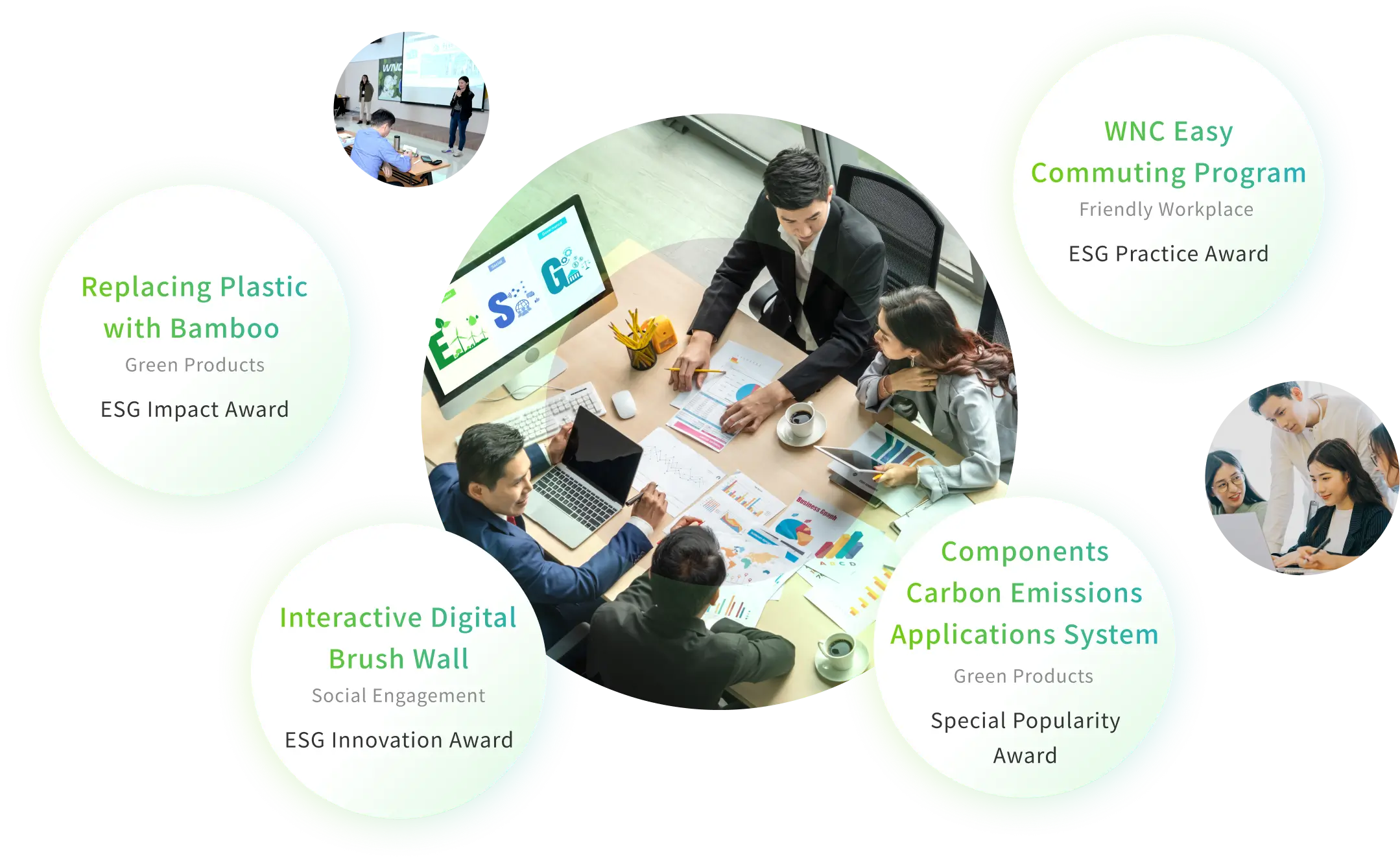
To encourage employees to embrace ESG concepts, broaden its sustainability influence, and further integrate ESG principles into its corporate culture, WNC held its first ESG Good Ideas Competition in 2024. This campaign called on all employees to contribute creative and impactful sustainability solutions. Through an internal proposal mechanism, the initiative enhanced employees’ awareness of sustainability issues and encouraged active engagement, driving innovation and change from the employee level. The competition called for proposals under five major themes: Sustainable Supply Chain, Green Products, Friendly Workplace, Social Engagement, and Green Factory.
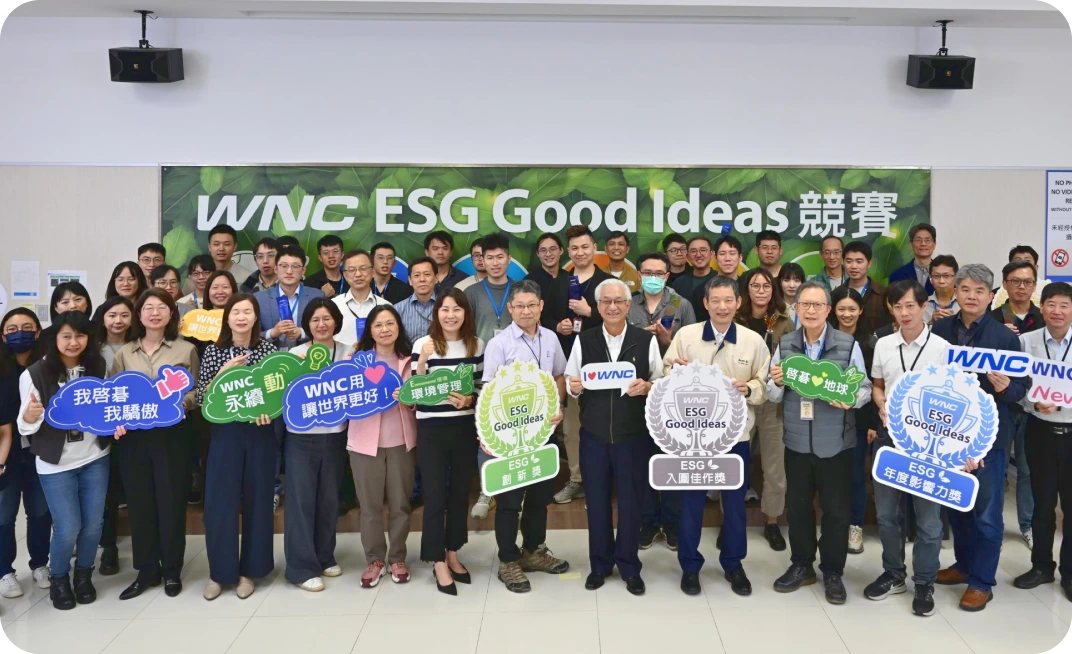
17 Proposals Showcase Expertise and Creativity, Strengthening WNC’s Sustainable Culture and Impact
Over the course of nearly three months, 121 proposals were submitted. After the preliminary screening and secondary review, 19 teams were selected to advance to the final presentation round. The award ceremony was held on March 26, 2025, and awards were presented in the following categories: ESG Impact Award of the Year, ESG Innovation Award, ESG Implementation Award, Finalist Merit Award, and Special Popularity Award. The total prize pool reached NT$500,000.